07 April 2009

Election for constituent assembly


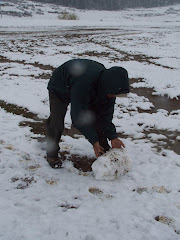
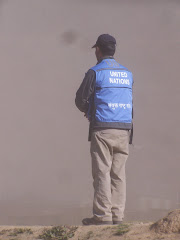
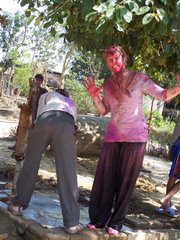
  Oh, there are sooo many pictures from the election that I would love to publish! After finishing my work with MS/HURON I work for three months with UNMIN for the Constituent Assembly. I was posted in Humla, on the border to Tibet, and it was absolutely wonderful! 

23 October 2007

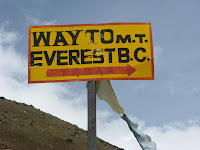
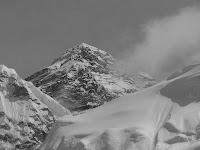
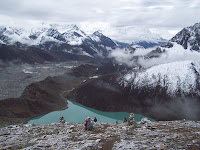
Everest Base Camp

Coming back to the blog after more than a year I found an unpublished 
draft and decided to finish it even though it feels a bit strange to edit a text I wrote such long time ago. 

To my great joy I had many friends coming to visit me in Nepal. One of them, Meredith, is pure energy personalized, and thus we went on a trek to Everest Base Camp. 

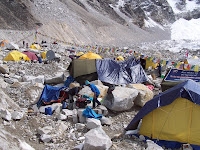
At 5364 m, Everest Base Camp is not permanent. At the time I was there it was inhabited by a Thai expedition waiting for good weather to make a second attempt towards the top.

Although Base Camp is only a tented camp is was vivid with life. There was a computer tent, a party tent playing music from the 70's, tea offered for all visited, campers digging around their tents, and climbers practicing on the ice fall next to the camp. 

In order to acclimatize for the fast ascending trek it is a good idea go high and sleep low, i.e. never to sleep at the highest point of the day. Thus, every day we walked two steps up, and then one step back down again, or simply climbed view points. 
Nice at is was to do this we had bad luck everytime we did climb a view point. We gad splendid weather for most of the trek, but never when we were at a view point.

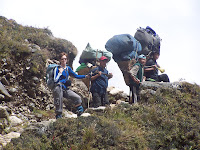
Whenever me and Mere climb a mountain together we do as mush as we can by our own means. Thus, also this time we carried our bags ourselves. I have to admit though that we packed light, not even near the size of the porters' bags.

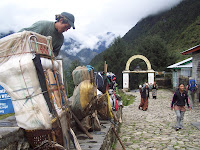
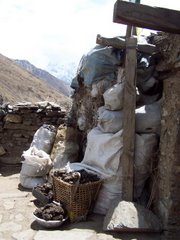
Not only do the porter have HEAVY (their bags, or rather baskets, often weigh more than 100 kg) bags, they carry them with the weight on the foreheads. 

I tried to lift one of them once, the one on the last picture, I did not even manage to move it. That rendered many laughs, until I nearly tipped it over. Had I done so they would have had to unpack it to get it up, that's how heavy it was. At that moment, yet again, I was just very happy I wasn't in their shoes, figuratively as well as literally since their shoes are most often nothing but flip flops.

Actually, the porters work under terrible conditions. Those working for a guide company and carrying the stuff for tourist are lucky. For them there are restrictions on how much they are allowed to carry, standard of equipment, hours walking per day etc. But for those working for the lodges it's much worse, and no one controls this, not even the trade union that actually exists for them. I am not proud of taking part of this, as I do just by being a guest at the lodges and eating their food. It always awakens thoughts on responsible trekking and is another reason I want the 
next trek to be not in the most touristic area.  

However, this was a beautiful trek in real good company. It turned out to be my last long trek in Nepal this time but I am certain I will go back for more treks, next time as I said off the beaten track(trek). Probably though, my next trek will be through the forests of Ituri in East DR Congo.

22 September 2007


The partnership between MS and Huron is running out and we're performing a partnership evaluation to find out what benefits came of the partnership to Huron itself and to the beneficiaries and the community. As a first step of this, we are visiting some of our LHRAs, and selected beneficiaries of them, discussing what we have done during the last three years, what they have participated in and what they think of this. We are also asking questions to the LHRAs themselves about their training, what they think of the support they have gotten from Huron, and what they want to do as LHRA in the future partnership, if any. I still don't know what they have written, but I sincerely hope they are honest and also write complaints or things they are less happy with so that we can
do something about this. Unfortunately I think they have to much
respect for the authority of Huron and its executive committee so I am afraid they are saying that everything is perfect and that they cannot ask for more. I know this is a lie, they tell me what they think and what they want, but they don't dare to tell Huron. This is something I hope I will have some affect on during my time here; I want them to start questioning the authority and knowing that they are just as good and important as the president, it's just a different title.


During the actual field visits, the language makes it a bit hard for me to be overly active why I spend my time observing to give advice afterwards on what I thought of the programme. Plus I act as the photographer, trying to capture everything and everyone with my camera, a very popular tool. Apart from documenting, I also designed the questionnaires, I was a major part of planning the visits, plus I was the driver, in other words, I am acting behind the scenes I suppose.
Anyway, time to let the pictures talk...


20 September 2007

Apparently not only the high way was swept away by the floods. I appreciate that they think highly of my driving, but sometimes I just have to say that even with four wheel drive I cannot get through that... Many disappointed looks when I said that 'I guess we're walking from here...'

How I wish I was a real photographer...

But if I was one, I suppose I should start to treat my camera better.
Usually they line up for picture taking, but sometimes you have to get their attention...


10 September 2007

Turning back to Butwal after realising that it will take days before a diversion is opened, and years before the bridge is repaired, we acted as school bus. We did not know how we were going to get to Ktm which was our final destination , and we needed to be cheered up a bit. Helping someone to their destination, saving them hours of walking is an easy way to reach that aim, espacially if they are children, singing all the way!

Vad är det du gör egentligen, jag har inte riktigt fattat det...

För ett par veckor sedan var jag hemma i Sverige och träffade massor med släkt och vänner. Det var härligt att möte så många, att få prata svenska och att se vad som har hänt med alla där hemma. Av många jag pratade med fick jag frågan, ”vad är det du gär egentligen, jag har inte riktigt förståt.” Så, antingen är jag dålig på att förklara vad det är jag gör, och att hålla kontakten med folk, eller så är det ingen som läser min blogg. Förvisso skriver jag mer om kulturella upplevelser, semestrar och mitt liv här nere. Men många gånger är det ju det som är mitt arbete. Och en del har jag väl ändå skrivit om mitt jobb.

Så, vad är det då jag gör egentligen, förutom att dricka te, försöka lära mig Nepali och ta del i den nepalesiska kulturen?

Det enkla, korta svaret, är att jag är en rådgivare åt en människorättighetesorganisation, Huron, Human Rights Organisation of Nepal. Men hur mycket klokare gör det er? Hur som helst så är det det jag är, jag är en human rights capacity builder för en lokal organisation som arbetar med mänskliga rättigheter. Rent praktiskt så ska bygga upp kapaciteten av Huron genom att hjälpa dem med planering, bugetering, implementering, utvärdering och rapportering av deras program. Jag ska hjälpa dem att bli mer effektiva, lära dem hur man håller möten, skriver rapporter och proposals, och så förstås delta i deras program.

Huron i Nepalgunj har som huvudprogram utbildning av volontärer, Local Human Rights Activists. Vi kallar dem kort och gott LHRAs. Detta har pågått i snart tre år, tre grupper om ca 30 st per gång har deltagit i våra kurser. Jag var med vid den sista kursen och höll i en del av utbildningen. Efteråt besöker vi våra LHRA i deras landsbyar där vi tillsammans med dem anordnar program där vi upplyser befolkningen om deras rättigheter. Vi besöker skolor och kvinnogrupper, vi sätter oss bland männen på det lokala te-stället eller vi möter dem vid ett tempel. Vi åker runt och hälsar på våra LHRA, och passar på att prata med deras grannar.
Andra delar av vårat program är att vi deltar i eller anordnar demonstrationer, rallies, vi går till stormöten med politiska partier för att monitorera situationen, vi monitorerar situationer där det har hänt något så som en banda eller att någon blivit angripen av någon av alla de rebellfraktioner som nu finns, och vi håller egna möten. I allt detta tar jag så mycket del som jag kan, jag håller tal på Nepali som någon översätter till förståelig Nepali, jag hjälper till i förberedelserna, och jag är den som kör. Men mest av allt lyssnar jag, iakttar och utvärderar, kommer med råd hur det kan göras annorlunda, och svarar på frågan om jag är gift medan jag dricker rikligt med sött te ur pyttesmå glas.




Getting anywhere is sometimes a struggle in this country. For a start there are often bandhas (strikes) or chakka jams (road blocks). Secondly, each year during the monsoon, the roads are destroyed by the rain. Nepal is extremely porous, and either the mountain sides come sliding down on the road, or the foundation of the roads gets washed away under it. Or, as happened a few days ago on the east-west high way, the only major road through Nepal, bridges get washed away by the powerful flooded rivers. To the left is the beginning of a landslide. We arrived here around four in the afternoon and quickly decided that it would be too dangerous to continue. A few hours later, it looked like this...

So, we could not go that way! The next day we tried going the other way, we'd been told that the road was cleared from landslides and open. As it turns out, it was very open, in fact it was missing. A bridge had simply been flushed away, leaving a ten meter hole in the road... The photos speak quite good for themselves I think. They are trying to build diversions, and until it is possible to drive around, people are crossing on foot to find a bus on the other side. When we first came to this site, we understood before we knew what had happened that this was not something that would be cleared quickly. Usually the Nepalis are very good at waiting, just sitting around doing nothing. But this time, buses were turning around, and people started walking immediately. This is how we realised that something big had happened. Still, we couldn't believe our eyes when we saw the hole. This explained the lines of trucks that we had past the last many kilometers...


Maybe a coincidence, anyway quite ironic, is this sign just some 50 meters from the former bridge. This is the district of Kapilbastu welcoming all drivers into their district, wishing them a safe and happy journey. Or, as they say it here, happy your journey!

A hole in the floor

In my new apartment, I have an Asian toilet, i.e. a hole in the floor. This confuses many people, how does it work, what does it look like, and is it a water toilet? It is a water toilet, basically what it is, is a toilet that has been lowered into the floor instead of having a seat. However, it is an actual toilet with room to put your feet on each side. And, it flushes just as a normal toilet.

Maybe it is a strange thing to put a picture on a toilet on your blog, but I hope this will clear up some confusion for some of you. This is what an Asian toilet looks like, if it is in a home of an expatriate at least. In an Asian home there would never be any toilet paper next to it, and most probably no plants. However, there would be some plastic flip flops because usually the flushing breaks down and the toilet is flushed by pouring water in it, or all over it. And, it is, I would say, also much cleaner than a toilet in a Nepali home.

Anyway, this is what it looks like; it is not an old fashioned outhouse as many see before them when I say I have a hole in the floor. The only thing you cannot do on this that you can do on a normal toilet is to sit on it, and I wouldn't recommend reading while on the toilet...

05 August 2007

Rallies and wall painting pictures


Exposure visit to New Delhi

In the end of July I and half of the executive committee of Huron went to New Delhi on an exposure visit. In Delhi we had arranged to meet with Indian Human Rights organisations to learn from them, exchange ideas and experiences, to build a network with like minded organisations, and to get new ideas on what to do and how to do it. We went to several oranisations, the first of them the Indian National Human Rights Commission (NHRC) who stronly urged us to push for the recreation of the Nepal NHRC. The Nepal NHRC has not been allowed to work the last couple of year since they it was not regarded to be as independent from the goverment/king as a National Human Rights Commission is supposed to be. A new commissioner has resentely been apointed but the commission has not started working yet.

Arriving in Delhi none of us knew the address to the guest house were we had planned to stay, and we had to start with finding an hotel why we ended up in the main bazar with the back pakkers. Realising that it takes at least an hour to drive anywhere we hired a car and driver to get us to our appointements. Luckily I had arranged only two meetings a day, with several hours in between which gave us almost enough time. Even after a year in Nepal getting used to everyone arriving late and nothing starting on time, I still wanted to arrive on time to our appiontments and I hurried my colleagues all the time, at times even making them skip their compulsery snacks.

Apart from the NHRC, we went to several NGOs, among others SAHR, South Asians for Human Rights. The chairman of this organisation is the former Prime Minister of India, and after some misunderstandings regarding when our appoinment was, we visited him in his residence. We left all the organisations with lots of notes and ideas as well as many new books for our mini library.

The members of Huron's executive committee are mostly men in their forties, taking care of me as if I'm their daughter. The first night in Delhi I went to the bazar on my own to use the Internet, only to find my colleagues looking for me being worried. "This is not Nepal, it is more dangerous here and you have to let us know where you are"... I had, but Nepalis are sometimes not that good at passing the message on. I had to leave earlier for Nepalgunj as I did not have time to visit Taj Mahal on the way home. After a lot of convincing I was allowed to travel alone, they first wanted to send someone with me. However, they did not let me take the night train as we did coming since that meant having to change to the bus on my own. In stead they put me on a direct bus, all of them coming with me to the bus park and putting me on the bus. "This is your seat, we have put your luggage hear. Your stopping to eat dinner after a couple of hours and remember not to take any food from strangers!" They did not need to worry, my two bus drivers (since it was a 16 hours over night bus I was happy they were driving and sleeping in shifts), took good care of me giving me a pillow, providing food and tea and letting me know when we stopped long enough to go to the toilet. I made it home safely, and left for Kathmandu and then Sweden the next day. At the time of writing I'm at home, having just been swimming in the lake before enjoying a dinner of freshly picked chantarells!!

Human Rights massage

The level of English in my organisation is very low and even though my programme coordination thinks of himself as being fluent (I still struggle to understand him sometimes, especially his written English) he has some mistakes that he keeps doing. for example spelling message with an a in our programme/budget. I still haven't been able to try the massage so I cannot say whether it's better then the traditional Japanese one I get in Kathmandu...

Our main programme in Huron is awareness raising of human rights in the villages around Nepalgunj. By educating LHRAs (there is a post further down on their training) and sending them home to their villages with the responsibility to spread their knowledge we aim to make everyone aware of the rights they have according to international standard. In my opinion we focus a bit too much on international standard, but we have to start somewhere. And even though our education focuses a lot on the UN covenants, conventions and other instruments, it is the basic rights we talk about when we get out in the villages. The right to housing, to food, work and education and the prohibition of child labour, the right to marriage and family, to birth and marriage certificates etc are rights that we often talk about and discuss.

The major problem in the villages is the poverty and the hard work they have to perform to get any food, the majority of the people are small farmers producing their own food, but even so people are interested in just listening to information about human rights and even though they of course would like to get financial support from us they are always grateful for our programmes.

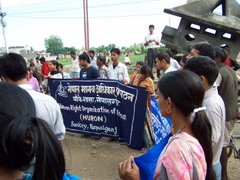
We have different ways of spreading the human rights message, for example we make posters, we gather people for interaction programmes in the villages, we visit the schools, we perform rallies through town carrying banners with human rights messages, and we have painted slogans on walls. On the picture to the right, the former Prime Minster of India is looking at a poster we have published together with a few other organisations in Nepalgunj. The organisations have formed a network called Peace Alliance and the poster is part of the programme we're performing in relation to the upcoming elections to the Constituent Assembly. We met the former Prime Minister during an exposure visit to India which I will write about very soon.

The wall paintings we did have been very popular. On ten different places across the district we painted a human rights slogan on the wall for everyone to see. Since it is impossible to do anything in Nepal without drawing a crowd, everyone is curious, we always know that a lot of people at least hear or see our message. If they understand it, or if it changes anything is of course harder to know why we are planning some kind of evaluation, how we don't know yet. The wall painting was in Nepali, and in half of the places Awadi, a local language that is a mixture of Hindi and Nepali. The message, roughly translated, is: Human rights for all. Peace for ever. Own constitution, own writing.

13 July 2007

Parties in the expat community

Living a life as an expatriate, moving around between missions, is sometimes hard and we are lucky to have each other! Since I arrived, the number of foreigners in Nepagunj have increased from about 15 to around 80. Thus there is always something going on, such as bbq's, football or volleyball, and parties. Unfortunately, many of the parties are farewell parties (the UN staff is moved around a lot), however we do have fun! Sometimes it feels like this is the main part here, the social part of life rather than the work we do.


One of the last parties we had we were asked to wear something from our home countries. I did not have anything, so I made a skirt looking like our flag. Looks quite nice actually... And for a while I was wearing the traditional (male) Nepali hat, and for a while the Jordan scarf (becoming the photo model of the night...)
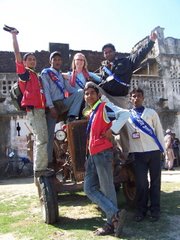
And, as I said, we have a lot of farewells. To the left below we are saying goodbye to Yael (France), here being lifted up jointly by Denmark, Norway and Sweden, and to the right, to our Brazilian friend Paulo. Even though both of the parties happened to be at my home, we are not at the same place since I have moved in to a new house. Now I am living together with three fantastic friends, one of them Tasha, you see to in the picture to the right. Me and Tasha are the happy new comers to the house joining Steve and Costanza who'se been in the house a while, pictures will come soon on all of them.


12 July 2007

Performing a session of the parliament

One of MS's partner organisations in Nepalgunj is HimRights, Himalaya Human Rights Monitors. HimRights have a 24 hour HR hot line, was very busy during the conflict, and lots of programmes involving children and youth. I had the opportunity of taking part in their latest programme here in Nepalgunj, a Youth Mock Legislative Parliament.

Around 70 young boys and girls of different castes, religions, ethnicity, minorities, sex etc (inclusion is still the name of the game and of course we have to set a good example) were chosen to play the parliament/government for a few days. After two days training, facilitated by the presence of two real secretaries of parliament, the session of the parliament begun. 14 of the participants were chosen as ministers, speaker and whips, and the rest were all members of parliament. The position holders were trained in how to behave, how to hand over documents, how to raise issues and much more.


The participants divided into boys and girls in order to make the gender balance in the government equal. The girls had no problem finding consensus on who among them should be position holders.


However, after announcement of the government, there were some obligatory discussions regarding how many participants from which group...


It was all solved in a very Nepali way, with some dancing of the facilitators...

After three days of session the parliament closed with a real press conference presenting the declaration that will be sent to the real parliament. All the participants were very active and the declaration was long and full of good ideas for the future Nepal. Improving the infrastructure and the electricity, re-opening radio stations, investigating violations during the conflict and the people's movement, fighting caste discrimination were but parts of the demands. The main one though was to establish a youth ministry, and to start listening to and involving the youth in the creation of tomorrow's Nepal!

22 June 2007

Waking up to snow, and walking through the gradually lighter morning is amazing, one amost forgets the altitude related headache.

Det var absolut underbart att vakna upp till sno, ett magiskt ljus over de vita bergstopparna och ett underbart knarrande ljud under skorna. Jag gick bredvid stigen hela vagen, for att kunna hora det typiska ljudet av vinter, och njot av den rena doften av kyla!

20 June 2007

Annapurna Circuit

Nepal is known for its mountains and trekking and yes, sometimes (for example during the hot season when we can hardly breath in Nepalgunj without breaking a sweat) I wish I lived up there. Well, I don't, and thus I go there for vacation. So, together with my colleague and good friend Anne, I set out for the Annapurna Circuit in the end of April, and the end of the trekking season.


Even though it was the end of the season, we were not the only ones on the track. The road that's under construction to Manang will take a few more years and therefore the donkey traffic jam will be a normal sight for quite some time more. In spite of their size they are fast walkers and they stop for nothing. Further up, we also got to see the yak. They are funny looking for sure. It was not season for yak yogurt but the cheese is good. In the Annapurna area most of the people are Buddhists and praying wheels are frequent on the side of tracks. Most of the times they are nicely carved wooden wheels, but if that's not available, anything that's round works...
We arrived at base camp without any problem, the trek was much easier, and much warmer than I had anticipated. The view was super and we only had one morning of rain. During the night before doing the pass, some snow came which made me very happy, I love snow! This is not the highest I've ever been, but this time I could really feel the altitude. However my headache was not hard to bare in comparison to the altitude sickness that two friends got. Seeing someone walking around as if she is extremely drunk, and not responding to anything really makes one respect the altitude! We all made it, and really enjoyed the beer we had when coming to Muktinath!

The original plan was to fly from Jomsom in order to get back to work in time. However due to wind and rain in Pokhara (I'm being nice, there were also some issues with some Nepali guides and hotel owners not fulfilling their reservation promises...), the flights were cancelled and instead we got on motor bikes! So we ended up doing the full circle, even though the equivalent to two days walking we did sitting behind some crazy drivers. It sure wasn't easy riding a bike with a back pack even though I was not driving myself for a change. The view was great though and I enjoyed the ride, too bad it's not possible to take good pictures. I will for sure do more trekking, and I'm sure (I know many of the readers are too) that I will stand at this point, 5416 meters above sea level, again.

08 April 2007

Besök hemifrån!

Jag har sådan enorm tur att jag är begåvad med en familj som gärna reser runt i världen och hälsar på. Lisa var här för ett par månader sedan, och nu har jag precis haft två underbara veckor tillsammans med mina föräldrar. Den här gången hade jag gjort en liten annorlunda resplan, dels så att vi skulle se så många fåglar som möjligt, dels så att jag själv skulle få se något nytt. Det hela blev lyckat, det blev kring 80 kryss i fågelboken - inte undra på att tuben är med på de flesta kortende flesta kort har tuben med, eller mamma som immiterar en eller annan fågel... Mitt hus ligger mycket bra till för den fågelintresserade och det tog inte ens fem minuter efter att vi kom hem tills tuben var framme! Det skådades sen fåglar i parti och minut från olika lägen i mitt hus.
Efter en snabb introduktion till Kathmandu och MS kontoret började vi semeestern med ett par dagar i Chitwan nationalpark där vi kryssade mer än 65 fågelarter, mamma som skarv var ett ädelkryss, och däremellan åkte vi kanot och blev jagade av en noshörning på walking safari! De som vi sen såg från elefantryggen var betydligt lugnare och roligare att se. Sen slappnade vi av med lugnara skådning från Nagarkot där vi hade hoppats få se de vita bergen. Det blev inga tyvärr, men i alla fall ett par kryss till. Sen kastade vi oss ner till Nepalgunj för att se min vardag, och mer om den snart igen.


22 March 2007

Årstider i Nepal

Farmor frågade mig en gång vad vi har för årstider i Nepal. Ibland känns det som att det bara är en, den som är för stunden! Under den varma säsongen förra året (det varmaste och svettigaste jag någonsin upplevt) vägrade jag att tro på folk som sa att det kommer att bli riktigt kallt. Sen under vintern, när jag låg och skakade av köld i min säng trots dubbla täcken och flera sjalar och med kuddar uppallade för fönstret, kunde jag inte föreställa mig att jag var kvar på samma plats. Varför kan inte kroppen minnas?

Jag har ju egentligen inte varit här ett år än, men eftersom den varma säsongen har börjat igen, tror jag mig ha sett alla de "årstider" som finns här och kan äntligen svara på farmors fråga. Vi har säsonger, men ändå inte på samma sätt som årstiderna hemma på något vis.

Den längsta säsongen är den varma, och den kommer i lite olika utgavor - den torra, den regninga, och den fuktiga. Den klart värsta är den fuktiga, man kan inte göra någonting utan att bli totalt sjöblöt och man har ett ständing saltlager på huden trots frekventa duschar. Regnet här är oregelbundet, inte alls som andra regnperioder jag upplevt där man kan ställa klockan efter regnet. Här regnar det på omväxlande tider på dygnet, ibland dagar i sträck, och ibland inte alls på flera dagar. Det här en den viktigaste perioden på hela året eftersom det är då riset planeras. För att kunna plantera ut sticklingarna måste fälten nämligen stå under vatten. Det enda som man med säkerhet alltid vet under denna period är att vägarna är totalt oframkomliga! För det mesta även för en fyrhjulsdriven bil som min trogna hilux.

Efter att det varit varmt sisådär sex sju månader kommer det ca två veckor perfekt tempertur innan vintern kommer. På vintern är det kallt, fruktansvärt kallt, både utomhus och inomhus. Det är förvisso temperaturmässigt inte lika kallt som hemma, men alltid ett par grader kallare inne än ute, och ingen snö som rättfärdigar kylan. Gissningsvis hade vi som minst ett par minusgrader, det var nog de dagarna jag var ute på mina långturer på motorcykel som jag ständigt återkommer till i mina inlägg...

Den kalla säsongen varar ca två månader och sen kommer paradiset som faktiskt varar nästan två månader. Då är det som svensk vår, friskt kyligt på kvällar och mornar, svalt på nätterna och perfekt temperatur på dagarna. Jag njöt varje sekund och bävade för den stundande värmen som man kunde känna komma smygande. Nu har den kommit, med besked, och jag funderar allvarligt på att skaffa air condition till mitt sovrum.

Det blev väl nästan tolv månader, de veckorna som felar får man nog tyvärr lägga till den varma säsongen. Tyvärr för mig som gillar kyla, men vad gör man inte för upplevelsen, jag trivs ju så bra med arbete och kollegor.

15 March 2007

eehh, rikshaw!

There are many ways to travel, or transport things, in Nepal, all with different levels of comfort or more or less hard to the person driving.

For example, it is possible to get a lift with one of the many tractors like these two brave boys trying to stay warm under a blanket. When not carrying other loads, this kind of transport can carry a lot of workers.

In the Terai, where Nepalgunj is, the rickshaw is by far the most common transport for just about anything. The rickshaw pullers often spent most of their lives in the rickshaw. They usually rent it and therefore only make money once they've made enough each day to cover the rent. I do not know what the rent is, but knowing that at least the Nepalis never pay more than a couple of rupees they are definitely not making a lot of money. Most people treat the rickshaw pullers with very little respect too. Calling a rickshaw, for any purpose is done by just screaming, eehh rickshaw... I for my part, don't think the rickshaw pullers are treated even with a fraction of the respect they deserve, and often they are but teenagers.
The rickshaws are however not the only thing being overloaded, trucks and carts are loaded until they almost burst, no difference is made as to what kind of force is pulling the load. Mostly the carts are pulled by buffaloes, but it is not uncommon to see the hand pulled carts still.
We are lucky that we have cars, and that we are allowed to drive them ourselves, even privately (many other NGOs have drivers and even though comfortable it limits your freedom I think). However even with a car of your own, there are a lot of things that happens unforeseen. To the left below we were stuck in landslides, for 23 hours, and had to spend most of the night in the car. We are using the time to dry our clothes that were soaked by the same rain causing the landslide. To the right, Jeppe is waiting in line to get diesel. There had been strikes for weeks and all traffic to the capital was cut off, i.e. no fuel came in to the city. We waited for 15 hours...


For those not having cars, or living on the country side where there are no roads good enough for much else than walking, buffaloes are a common way of travel. It is slow, but it will get you where you are going.


The motor driven public transport on the highway, is often overcrowded and slow. Since it is a lot cheaper to travel on the roof, many do so. On the picture below though, the reason for travelling on the roof has more to do with being seen and having a change to chant slogans while travelling. They are Maoist students going to yet another mass meeting... To the right is a over crowded tempo (taxi) going up the mountains to Tansen. Since it's been raining and landslides might happen, o they just slip over the edge, it is probably safest to be hanging out the back. In that way they can always jump off.


Travelling on buses often means waiting for hours, due to landslides, flat tires or whatever. But when it starts moving, you better be quick to get back on board because they are always in a hurry to the next break down, landslide, chakka jam...


Then there are bicycles, also used a lot, and more often than not, by at least two people. Sometimes there are no roads or bridges, and then a bicycle comes in handy - it is much easier to get a bike on the ferry than a motorbike, I know for sure and I have written about it below...

It is very common to see a whole family riding on a bicycle, the women sitting behind, always on the side and often with a baby and big bags. Even the school "bus" are pulled by bikes, and though they look small, they take an impressive amount of kids in
them, hanging all the school bags on the outside.


Between the border to India and the market of Nepalgunj, this is the most common transport, usually carrying at least some 15-20 people...
And, for those who can afford it, the motorbike is the preferred transport!

06 March 2007

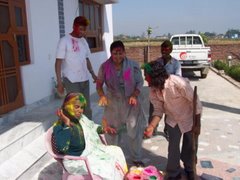
Holi - playing with colours!

Holi is a perfect festival for anyone refusing to grow up and stop playing. Although technically a celebration to the Lord Krishna and victory over the demon Holika, it is now merely two days of playing, drinking, eating bang - or good food, and relaxing at home with your family. For some reason, the Pahadi, people originating from the hills, and the Madeshi, originating from the Terai, play on different days, but since people in Nepalgunj is approximately 50-50 Pahadi-Madeshi, we simply played for two days.

It is wise to put on something old for Holi, because the game played involves lots of colours. Pigment of all imaginable shades are smeared or thrown at friends until everyone is unrecognisable. The more the merrier seems to be the only rule of the game.

Starting at home with giving tikas to family members, people then go around in their neighborhood calling neighbours from their house to come play Holi. This is a day when it is possible to enter any house, regardless of whether or not it would normally not be the custom. When getting out of the house, one pretty much consent to being a target for anyone, especially if you are a bideshi. Children block the road and demand money for letting you pass or they throw coloured water.

I played Holi both days, first day with the family I share house with, the next day with some of the LHRAs of Huron. Saturday was a pretty calm day playing with the neighbours and then eating and dancing at home. Sunday however, things went crazy. Together will Anup, Bhupendra and Ram Sing, I went around to different villages and home of friends together to play. The further away from Nepalgunj we came, the more fun it was to paint the bideshi. I was completely covered in colour and had to give tikas and pose for pictures with everyone. Even though sometimes thinking that I'd chowk from the pigment, and being blind becuase my glasses were aither covered by coulour or taken from me, I had a great time all day. I even enjoyed the dancing that I could not escape when we played at Bhupendra's home.

After dancing in the temple on the first picture we all went home to my house to prepare the Holi dinner. But, before being able to prepare it, we had to catch it... We had decided that we were going to eat fish from the pond in our garden, prepared Nepali stile downstairs, and bideshi stile by me upstairs. Since we didn't get enough, it was quickly decided that only I would cook (with the help of the LHRAs). But since they cut up the fish nepali stile before I had a change to say that I wanted to cook them whole, I was for a while thinking I wasn't going to be able to prepare anything tasty of it. I had not much choice but to do soup which I've never done on my own before. Luckily I managed, and at least they said they liked it...

01 March 2007

Maosit massmeeting in Nepalgunj

The Maoist are travelling the country holding mass meeting and Tuesday Phagun 15 (Nepal has their own calender) it was the turn of Nepalgunj to be the host. The party expected 300.000 people to show up, not all of them would come voluntarily. Youth groups started moving around in Nepalgunj already the day before, and early in the morning banners were coming up and signs drawn on the street to point everyone in the right direction.

The last couple of months there have been several clashed between the Maoists and MPRF, Madehsi People's Rights Forum; both parties have called Bandhs (strike/blockades), they have detained each others and people have been hurt and killed in the clashes. Remembering the incident during Christmas in Nepalgunj, the human rights (civil society) community feared violence again and all organisations in Nepalgunj organised a common monitoring of the meeting.
Buss loads of people were taken in to town and demonstrations started from several points walking towards the field of the meeting. Even though not as many as expected showed up there were several large processions, mostly consisting of young students, women and old people.

During the meeting, several speakers talking, with cultural programmes in between. Everyone was made to sit down so that we could all see, and there were speakers everywhere, even outside the field. After the programme, people were quickly bussed back out of Nepalgunj and after less than half an hour the town was back to normal again. All in all the meeting was very well organised and it was easy to see that this used to be (hmm, is) an army.

The main speaker of the meeting was of course Prachanda, the Maoist leader. He talked about the creation of a new Nepal that will work together with the old Nepal, welcomed us all to the new Nepal and said that we must not forget the last decade of conflict leading Nepal to the situation of today. He also talked about the importance of the new constitution and the up-coming election to the Constituent Assembly. This is about where he lost me, as all Nepalis, he said everything at least three times, and I had no change of following all of the one and a half hour speech. Therefore I do not know if he said how the still ongoing violence should be stopped, why over 30,000 combatants but only some 3,500 weapons were registered by the UN, or how the most used political technique of calling bandhs can be regarded democratic rule. About the difference between combatants and weapons, he has earlier said that the other weapons had been flushed away by floods or burnt by the Nepal Army. His position on the violence and bandhs I do not know.
There were no clashes or violence in town or at the meeting. Afterwards however, it turned out that some Maoist had gone out to villages in the district to summon people. The MPRF had shown some resistance and at least two villagers died in the fights between the parties. There might be peace in this country, but for the Nepali people, it is still not safe.

23 February 2007

Cycling for peace and human rights

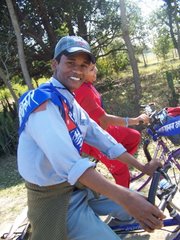
Have I told you about "my" LHRAs, the Local Human Rights Activist of Huron? If not it's about time, they are without doubt the joy of my my work with Huron. We have 96 LHRAs spread out evenly in our district and, as the word of the day in Nepal is requiring, they are inclusive of just about anything; e.g. 50% women, several different religions, different castes (yes they unfortunately still exist) and indigenous people. In their aim to raise awareness of human rights they came up with the idea of a peace rally through our district, by bicycle. If i could post a picture showing the true condition of the roads in Nepal, you'd understand why this is such as achievement, and why my behind was so sore after the rally! Surprisingly I'm not sore after the journey, however even though only February I got several freckles and my nose is already scaling off...

To make a long story short, we went from Nepalgunj to the end of our district on bicycles, wearing banners and signs promoting human rights and peace. In the villages we passed we stopped for programmes (in Hindi and Awadi, as if I thought it'd be enough to learn Nepali...) providing information on human rights and the upcoming election.

It was a long journey with several typical Nepali experiences. To mention a few - crossing a river by boat, having to do the last half on our own (see picture); passing a local ambulance, pulled by two oxen; having to wake up the bed mates every time the hardness of the bed made me have to turn around; towing a broken bicycle; and cycling in complete darkness, due to unsurprising and obligatory delays, without sufficient torches.

Noticing the happy response in the villages the LHRAs are nor planning a second, and slightly longer cycle rally - all through Nepal! For this we need lots of sponsoring, so if any reader is a fan or human rights, peace or cycling, please don't hesitate to be our sponsor!


23 January 2007

Visit to a Nepali prison

As a part of the human rights protection and promotion work, Huron visits prisons and detention centres to safeguard the human rights situation. The prison in Nepalgunj is quite small and houses about 200 prisoners, of those some 25 women. Men and women are separated, however it is the same prison and from the respective upper floors they were talking to each others calling over the wall. In the women’s part, which I only saw through the gate, there were also some small children living together with their mothers. The children are allowed to stay until they turn 10, then they have to go somewhere else. In the men’s part the youngest prisoners were 14 years old, and there is no kind of separation from the adult prisoners, not even at night when they are locked up.

Food has to be prepared by the prisoners themselves why there are several clay stoves around the outer wall. The stoves are not nearly enough and I doubt the new ones being created will change that very much. The prisoners receive 250 g of rice per day, plus 30 Rupees (around 3 SEK) to buy the rest of the food they need. Some of them have started doing business by cooking lots of food and selling it to the others.

The rooms are small and dark, and since there is no glass in the windows they are extremely cold during winters. There is no heating, but at least they are provided with a, small and dirty, blanket for the cold nights. I imagine it is extremely hot it is during the summer, and I don’t think the fan that is in each room makes much of a difference unless positioned directly under it. There is no furniture whatsoever in the rooms, only small mats for each prisoner to sleep on, and hooks on the wall for them to keep their belongings on. The room for each prisoner is about 45 cm. Each room has a toilet (hole in the floor), but the prisoners have to clean it, as the rest of the room, themselves why of course it is not very clean. New toilets are being constructed outside, which apparently is an achievement of previous visits and remarks made by Huron and other organisations. There are no bathrooms so washing can only be done in the toilets, or under the one water hose I saw outside which does not give much privacy - but then again Nepalis don't really care for privacy.

I was positively surprised with the condition, and with facilities such as a TV-room, library, class room and the possibility to practice different religions. The living conditions are thus not good, but much better than I thought. However, legally there are problems with many of the prisoners' cases and trails; it is for example a big problem that many of them are still awaiting judgement, even after periods of up to eight years. Many are also still awaiting trial. Thus the main problem lies in the judiciary, not in the prison themselves, and about this I still do not know enough.

08 January 2007

The usefulness of a motorcycle for field visits

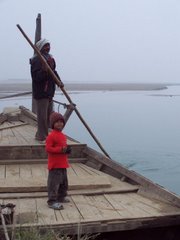
A mere couple of weeks after passing the test, and not very many kilometers on the bike, I spent Nepalgunj's two coldest and most foggy days driving far out in the field on motorcycle. Me and my colleague Krishna went out to visit our newly trained LHRA to monitor how far they have come in their work and collect reports of the situation in their areas. As there are no roads in this part of Banke district, we had to use the motorbike. I quickly saw the point of learning to drive on a field with nothing but huge potholes and lots of unreliable spectators or other "road" users, and even the usefulness of the slalom diver's test. This is what I practised when I sometimes struggeled to figure out which path was the best to drive on, or to find a path, slalomed through a hord of goats or cows, made my way over a dry, sandy riverbed etc etc. Driving though the thick sand as in the picture on the left was impossible with a passenger so Krishna had to walk quite a few times. A major reason for why the biggest possible means of transportation is a motorbike is that there are no brindges to cross the Rapti river that separates Banke's most remotes VDCs (village development committees) from the municipality of Nepalgunj. The only way to get over the river is by boat, some large enough so that i dared to drive the bike myself on the boat, but some so small that I gladly gave the handlebars to the boat men.
Even though the most challengeable this time was the driving there, the visits we conducted were also fruitful for our work. Our new activists have been very active and productive. They have conducted training for lots of people in the villages, assessed the situations and needs in their communities and written interesting reports for us to act upon. Soon I will write more on this work that they do.


30 December 2006

Hmm

This picture is a bit blurred I know, but so was the training we got... Anyway this is me and Anne, my closest friend and colleague here in Nepalgunj, for the first time on our very own, brand new motorcycles!

27 December 2006

Having guests

Before Christmas I invited my and Anne's colleagues for lunch. Even though I had the food delivered from a restaurant I enjoyed being the host. It's also a good thing that it is normal to sit on the floor since i did not have enough room for everyone otherwise. After eating we danced. I think it will take a long time before I feel comfortable with the Nepali way of dancing one at the time with the others watching, especially since they really love making the foreigner dance. But it's fun being the one watching. Here is Krishna, my closest colleague dancing.

25 December 2006

Jul med Barna i Bullerbyn...

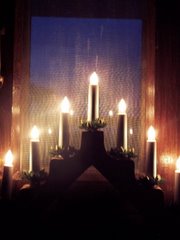
Min första jul utan familjen blev minst sagt annorlunda. Det var mycket som gick snett, men det var också en del som var på plats. Mina paket hemifrån hade bara till hälften kommit fram i tid, men de som kom var precis vad jag ville ha! Nu måste jag bara klura ut hur man öppnar pepparkvarnen från farmor så jag kan sätta igång och mala... Jag hade inte gjort varken köttbullar eller fått tag på Stilton, och mina lussekatter blev en enda stor degmassa, men jag hade både sill lax och ansjovis, som fortfarande väntar i kylskåpet på Janssons inspiration. Jag hade ingen gran, men några grankvistar att lägga klapparna kring innan min julklappsutdelning. Min telefon, och följdakligen också internet, var avstängt så jag lyckades inte logga in på Sveriges radio till Nicke Lilletroll, men jag har ju en mobil så jag fick tag på familjen mitt i julfirandet där hemma, och istället för Kalle Ankas jul på TV läste jag hela Bullerbyboken. Tack vare paket heifrån, och hemvändade svenskar (tack P-G och Alison) hade jag riktigt mycket julpynt. Mitt nya miniänglaspel snurrade fint hela dagen och mina adventsljusstakar har länge spridigt hemtrevnad. Och när jag låg på min soffa och kände mig som mest ynklig av min pelikansjuka (ja med den svullna halsen såg jag mest ut somen pelikan) kom barnen nedifrån upp med julkort de skrivit till mig och ville att jag skulle komma ner och titta på deras gran. Så nog blev det lite jul här i Karkando-8 också, och att det inte blev mer beror bara på att jag var sjuk och inget annat. Kanske åker jag hem nästa gång det är jul, kanske ger jag Nepalgunj ännu en chans, det får vi se.

Också i den här delen av världen är det vinter i december. Vinter i Terai är inte direkt julaktig, särkilt inte som det inte blivit för kallt för invasionen av myggor som fortfarande plågar oss med sin närvaro. Nepaleserna själva klär sig visserligen som om det vore kallt som i Sibirien, fast det är egentligen bara inomhus som det är kallt. Solen är dock inte alls så stark längre, och det tar långt in på dagen innan den klarar at lätta upp den dimman som ligger som ett vitt täcke över oss varje natt. Varje morgon jag vaknar är det som att vara i en båt mitt i en vit ocean, det är otroligt vackert.

22 December 2006

Just before Christmas all the Development Workers were called in to the country office in Kathmandu for first aid training. During three intensive days we trained on each others, or dummies, to find out what's wrong, to give mouth to mouth, apply bandages on wounds or fractures, to carry each other on back boards etc. To the left Rupa is performing DRABC (Danger, Response, Airways, Breathing, Circulation) to secure that Karen is OK, and to the right Nanna with is trying to help Little Anne to breath on her (his?) own.

This occasion was also the first time since all the new development workers came to Nepal that we were all in Kathmandu at the same time. Since a Danish chef just recently opened a restaurant not far from our office/guest house, this created a golden opportunity for a Julefrokost! In the middle of Kathmandu we had a very Danish Christmas party with dishes like Pork steak, Duck, liver pate, and the best red cabbage I ever tried etc etc. And of course some snaps. As soon as Anne comes back home from Denmark were she's celebrating Christmas I'll post pictures, I relied on her camera that night...


And, of course there is no Christmas without a Christmas punch at the office. After feasting on a buffet of the most delicious Thai food, worked perfect also for Christmas, we played some games and then came main event of the party, the Pakkeleg. Pakkeleg is a Danish tradition where everybody brings some small gifts which are all put in the middle. After dividing the gifts by taking turns with dices, the game goes on for a while and in stead of taking from the middle, you steal gifts from each others. Lots of fun, and extremely popular among the Nepali staff. To the right, Husna Banu, my programme officer at MS, is carefully choosing a gift after being lucky with the dices...

14 December 2006

HR training

The benchmark of Huron Banke, and one of the objectives of the partnership with MS is our volunteers, LHRA's (local human rights activists). Youths from the villagers in the district are trained in human rights in order to raise the awareness in the community. After the training they are expected to go out and talk to people, telling them about their rights. They also work as watchdogs for us in the community, and occasionally as mediator in cases of violations. The strength of the LHRA is that they are local people, they are known in their community, now who to talk to, and hear what's going on. Since Huron started this, the general monitoring we perform has become much more effective.
This is the third and last time this training is taking place in Banke district, the district of Nepalgunj. However other branches of Huron have seen the benefits and are starting similar training. The next step for us is evaluation, what difference have they made in the villages, and how can we go on from here. This is the next work for Huron, finding the strengths and weaknesses of the LHRA's, giving them further training if they need, and developing their strengths to claim HR performance by the authorities.

10 December 2006

Human Rights Day

10 December is the international human rights day and in Nepalgunj several of the many human rights organisations celebrated with a peace rally through town. We were at least 10 different organisations, as well as the police, the armed police and some members from the army.
During the day many organisations also celebrated by organising free speech competitions and I was invited to two of them. The first one was a women group of Amnesty International where young girls where talking on the subject of women's rights and domestic violence. Even though very young and some of them very nervous, they were very good and really showed that they knew something about the subject. The second competition took place at a youth club of one of our LHRA's, Ramsing (the one wearing the cap). Their topic was youth's role in development of sustainable peace. This time I was the guest of honour and I therefore got to hand over the price to the winner, as well as give him a tika. This was the first time I have ever given a tika and it is definitely not as easy as it might look.

We ended the celebrations by lightening candles in one of the chowks (intersections) in town. This was very nice, even though kids ran away with the candles as soon as we left...

08 December 2006

Taking the motorcycle to the driver's test...

Early Sunday morning I fulfilled an old dream of mine, I took driver's licence for motorcycle. The test took about ten seconds, however since we were about 150 people taking the test, the whole procedure took about 2 hours. I was told to be there at 6.30 and when we got there the line was already very long. The test consist of driving slalom between 5 cones to show that you can handle the bike, no more no less! they started with the men , because when it was the women's turn, the last cone was moved slightly to make it easier... While we were waiting for our turn on the bike, taxis started to line up around us. After finishing the test for bikes, it's the turn of cars. This test too takes place here, far from traffic or natural situations. They are also supposed to drive, also reversing! through a series of cones, and since a taxi is the smallest car available, this is of course the best car to use for the test!

My practice before taking the test consisted of driving at a field, practicing with cones in the office's parking lot, and practicing in the traffic of Kathmandu - alone! Driving in the field was an interesting experience. Whatever vehicle people in Nepal are learning to drive, from bicycle and motorcycle to bus or truck, the practicing takes place in this field. This you would think of course means that there's a system in place for where of how to drive, when to come, etc. to make it safe and efficient. But no, not at all. The field is at any given time full of different vehicles driving around in circles at random, onlookers, football and cricket players, animals, and occasional drunks that could not find a better place to sleep. And of course potholes everywhere. The logic is that when you know how to drive here, it will be easy to be on the road. True enough, it is easier to drive on a proper road, but this does not give any practice on how to behave in the traffic. Therefore, given the combination of the practice, and the test, the daily chaos on the streets of Kathmandu is no longer a surprise.

02 December 2006

I am creating this blog because on my old one the pictures never work (and also due to complaints that the too many categories on the other blog makes it too messy). This first post is a test to see if this blog works better. I'm keeping my fingers crossed that it will be both better and easier to read.

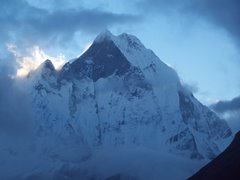
This is a picture from Annapurna Base Camp where I trekked together with Vahid. We had to stay an extra day at the camp in order to get the view since the first day it was overcast. It was freezing cold, and due to the bad weather not possible to do much more than to stay in the dining hall just waiting for time to pass. However it was all worth it waking up to this next morning! I'm at 4100 meters, the peak behind me is Annapurna South, one of the 8000+ peaks surrounding this trial. More later about our trekking...